getdigitalug

Mobile money changed everything in Uganda. Bills, airtime, family transfers, savings: it all runs through a phone now. That also means fraudsters have a massive pool of targets, and the Uganda Communications Commission has called mobile money fraud one of the fastest-growing financial crimes in the country. The methods keep evolving, too, with new twists popping up every few months.
What catches most people off guard is how low-tech these scams actually are. There’s no complex hacking involved. Fraudsters rely on panic and misplaced trust to get what they want, and most victims only realise what happened after the money has already left their account. Once someone learns the common tricks, though, spotting them becomes far easier than most people assume. Below are the scams doing the rounds right now, along with what will actually stop them.
The Fake Airtime or Promotion Call
Years old, and still working. Someone rings you up claiming you’ve won a promotion from MTN, Airtel, or another provider, throws out a fake reference number, and asks you to “confirm” your prize by sending a small mobile money payment or dialling a USSD code. That money vanishes instantly. Some callers take it further and ask for your PIN outright, which hands them full access to your account.
Watch for the urgency. They’ll insist the offer expires in minutes, pressuring you to act before you’ve had a chance to think it through. Real promotions from telecom companies don’t operate this way at all. MTN and Airtel will never ask anyone to send money to collect a prize, and no legitimate representative will demand a PIN over the phone.
SIM Swap Fraud
This one is nastier. Victims often have no idea anything happened until the money’s already gone. A scammer collects enough personal details, sometimes scraped from social media, sometimes bought from a dodgy agent, and then contacts the mobile network pretending to be you. They request a replacement SIM, claiming the original was lost or broken.
Once that new SIM goes live, yours dies. The fraudster now gets all your calls and texts, including every mobile money notification, which means they can reset your PIN and drain the entire account within minutes. It all happens incredibly fast.
Pay attention if your phone suddenly drops signal for no obvious reason. Don’t wait around hoping it’ll come back. Contact your provider right away, because the faster you flag it, the better the chance of freezing your account before anything moves out.
The “Wrong Transfer” Trick
Out of nowhere, money lands in your account that you never asked for. Then a stranger calls you up, sounding panicked, saying they accidentally sent the money to the wrong number and pleading with you to send it back right away. It sounds perfectly reasonable.
Here’s what’s actually going on, though. That money was stolen from someone else, or it’s one step in a longer fraud chain. The moment you “return” it, you become part of that chain yourself. When the original victim or the telecom company traces the funds, the trail leads to your account, and you’ll be the one fielding questions from investigators.
So if unexpected money shows up, don’t send it back manually. Call your mobile money provider’s customer service line and report the deposit, because letting them reverse it through the proper process protects you from being dragged into someone else’s fraud case. That keeps you in the clear.
Agent Fraud at the Till
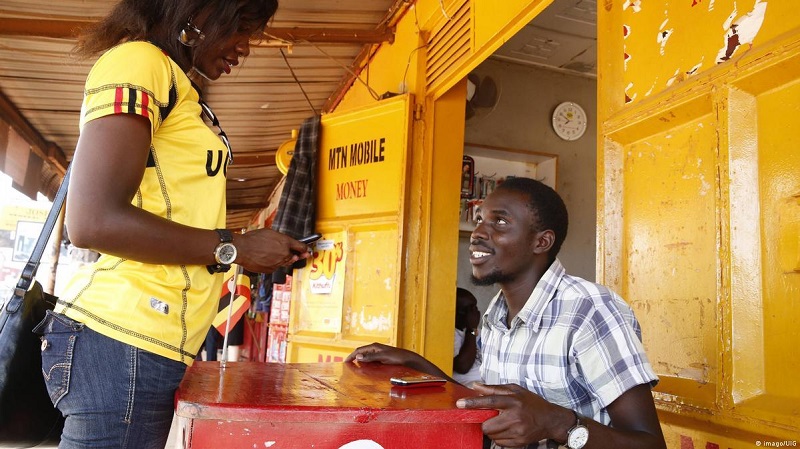
Not every scam involves a phone call or a text message. Some happen face-to-face at the agent’s counter, where rogue mobile money agents have been caught tampering with withdrawals, telling customers the transaction failed and asking them to try again so they can process the withdrawal twice. Others take a different route. They’ll watch closely while customers type in their PINs and then use that information later.
A few habits help here. Always wait for the confirmation SMS before you leave the agent’s shop. Shield your phone when entering your PIN, the same way you’d cover your hand at a cash machine, and don’t let anyone watch over your shoulder. If an agent asks for your PIN out loud, just walk away.
Phishing Messages With Fake Links
This trend is newer in Uganda but already well established in other countries, and it’s caught on quickly because the messages look so convincing at first glance. An SMS arrives that looks exactly like something your mobile money provider would send, warning about a suspicious login or a frozen account. It includes a link.
Click that link and you’ll land on a fake version of your provider’s website that looks so real most people won’t notice anything wrong until it’s too late. You’re prompted to enter your phone number and PIN to “verify” your account. That’s all they need.
Telecom companies in Uganda don’t send links over SMS asking for login details, so any message like that is a red flag no matter how official it looks. Delete it straight away. If you’re genuinely worried about your account’s security, pick up the phone and call your provider’s official helpline yourself.
How to Keep Your Mobile Money Account Safe
There’s a pattern here. Almost all of these scams work because people react quickly under pressure without pausing to check what’s actually going on, and the scammers know exactly how to create that sense of urgency. A handful of good habits will cut the risk dramatically.
- Never share your mobile money PIN with anyone, not even agents or people who claim to represent your network provider.
- Change your PIN on a regular basis, and avoid obvious combinations like your birth year or 1234.
- Register your SIM card properly and keep your personal details with your provider accurate and current, which makes SIM swap fraud much harder to pull off.
- Always confirm transactions through official SMS notifications before handing over cash or goods to anyone.
- Report suspicious calls, messages, or transactions to your provider as soon as they happen. Both MTN and Airtel run dedicated fraud reporting channels for exactly this purpose.
What You Can Actually Do If You’ve Been Scammed
Acting quickly makes all the difference. If there’s any chance your account has been compromised, call your mobile money provider’s helpline straight away and ask them to freeze the account before the money moves anywhere. Then file a report with the Uganda Police Force’s Cyber Crime Unit. These cases do get investigated.
Save every scrap of evidence. Screenshots of messages, call logs, transaction IDs, dates and times: any record of what happened will speed up the investigation and give you a much better shot at actually getting the money back.
There are legal protections too. Uganda’s National Payment Systems Act requires mobile money providers to have dispute resolution processes, which means there’s a formal route to pursue if money goes missing from your account through no fault of your own. Don’t assume lost funds are gone forever, because plenty of people have recovered their money by going through this process.
Prevention Beats Recovery Every Time
Scammers aren’t going anywhere. Mobile money fraud in Uganda will keep growing, and the people running these cons will keep finding new ways to catch victims off guard, so staying aware of the latest tricks really does matter. But nearly every common scam depends on one thing: getting you to act before you think. Pause and keep your PIN to yourself.