getdigitalug
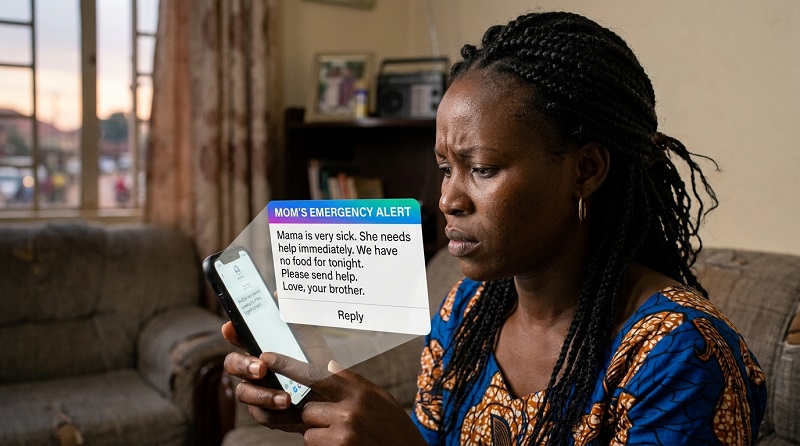
That strange MTN notification you got last week, the one that looked almost too real? You weren’t imagining things. Scam messages used to be easy to catch. Bad grammar, weird phrasing, numbers that didn’t match any real service. Those days are over.
Criminals across East Africa are using artificial intelligence to write flawless phishing texts, clone voices for phone calls and run fraud operations at a speed that old detection methods can’t keep up with. Millions of Ugandans depend on mobile money for daily transactions, and knowing how these new tactics work isn’t optional anymore.
Mobile Money Fraud in Uganda Is Getting Dramatically Worse
Fraud has plagued Uganda’s mobile money ecosystem for years, but the scale has shifted fast.
A 2021 Innovations for Poverty Action (IPA) survey found that 47 percent of Ugandans using digital financial services had faced a fraud attempt through phone calls or SMS. Most of those scams ran on basic social engineering. Someone would call pretending to be from the network, ask for your PIN, or tell you that you’d won a prize.
Then AI entered the picture. INTERPOL’s African Cyberthreat Assessment Report 2026 found that AI now plays a role in 55 percent of reported cybercrimes across Africa. Continental losses jumped from $192 million in 2024 to $484 million. East Africa has become a primary hub for mobile money fraud, with Uganda Communications Commission data showing that 60 percent of mobile users encounter scam attempts every single week.
How Scammers Are Using AI Right Now
AI gives today’s fraudsters polished language and stolen voices, plus the ability to hit thousands of targets at once.
Phishing Texts Without the Telltale Typos
Remember when you could spot a scam SMS by the spelling mistakes, AI text generators killed that shortcut. A phishing message can now mimic the exact format and tone of a genuine Airtel Money or MTN MoMo notification. Some even include your name or reference a type of transaction you recently made.
These messages ask you to click a link, confirm your PIN or call a number to “verify your account.” Because the language is clean and the details look right, you can’t just glance and dismiss.
Understanding how AI generates text and audio has become a form of self-defense. You don’t need deep expertise. Even a basic grasp of how these tools work helps you spot machine-generated deception when it hits your phone. GetDigital offers a free AI course in Uganda that covers the fundamentals, including how AI creates content designed to mislead.
Voice Cloning: Three Seconds Is All It Takes

This is the tactic that catches people most off guard. Research by cybersecurity firm McAfee showed that as little as three seconds of audio can produce a convincing voice clone. Scammers pull those samples from WhatsApp voice notes, TikTok videos or Facebook posts.
Once they’ve got a clone of a family member’s or colleague’s voice, they make urgent calls. Your “relative” phones to say they’ve been arrested, hospitalized or stranded. They beg you to send mobile money right away. And by the time you try to verify through another call, the money is already gone.
Reports of these scams have surfaced across East Africa, West Africa and Southern Africa. The tools keep getting cheaper and access keeps getting easier.
Automated Attacks Running at Massive Scale
Running a scam used to require actual people. Someone had to write each message, make each call, manage each conversation individually. AI removed that constraint.
Chatbots now hold convincing conversations with dozens of potential victims at the same time. Automated systems push thousands of personalized phishing messages in minutes. A scammer doesn’t need to get lucky with one person anymore. They can target thousands of mobile money users across Uganda with almost zero human effort.
How to Actually Protect Your Mobile Money
Watching for spelling mistakes won’t save you from AI-generated messages. These steps will:
- Never share your mobile money PIN, OTP or password with anyone, even if the caller sounds exactly like someone you know.
- If a relative or friend calls with an urgent money request, hang up. Call them back on a number you already have saved.
- Don’t click links in unexpected SMS messages, even if they appear to come from your bank, MTN or Airtel.
- Set up a code word that only your close family members know. Use it to verify identity during emergency calls.
- Report suspicious messages and calls to your network provider. Airtel Uganda has deployed an AI-powered spam detection system that flags suspicious SMS automatically for all subscribers at no charge.
- Limit how much voice and video content you share publicly on social media. Even short clips give scammers enough audio to clone your voice.
What Telecoms and Regulators Are Doing About It
Uganda isn’t sitting back. Airtel Uganda launched Africa’s first network-level AI spam detection system in 2025, analyzing over 250 message attributes to flag suspicious content. MTN Mobile Money has started using AI to detect and counter social engineering attacks targeting its users too.
The Bank of Uganda introduced Cyber and Technology Risk Management Guidelines in December 2024, requiring all supervised financial institutions to tighten their digital security. But these institutional efforts won’t catch every scam before it reaches your phone. Your own awareness still matters more than any filter.
Build Verification Habits Before the Next Scam Call
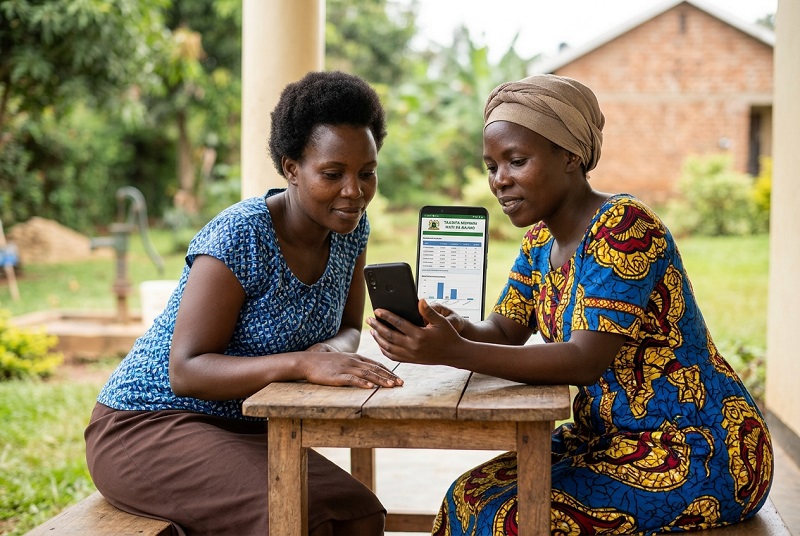
AI-powered scams will keep evolving as the technology improves. That’s just the reality of where mobile money fraud is headed. You don’t need to become a cybersecurity expert to stay ahead of it, though.
Know that these tools exist and learn the basic tactics fraudsters use. Work simple verification steps into your daily mobile money routine. Call back on saved numbers instead of trusting caller ID. Keep a family code word for emergencies. Think twice before posting voice notes publicly. None of that costs you anything, and it makes you a much harder target than the person who doesn’t know these scams exist.
Next time a message or call sounds unusually convincing, don’t tap, don’t send. Verify first through a number you already trust.

 getdigitalug