getdigitalug
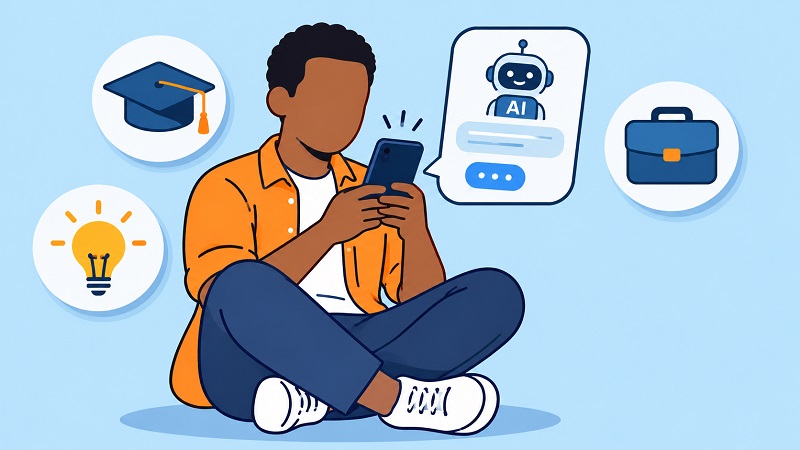
No, you don’t need to code. Most people using AI right now have never typed a line of Python. They’re producing real work with it daily. If you’ve been sitting this out because you think artificial intelligence requires a computer science degree, that belief is costing you time.
Across Uganda, the word “AI” still makes people picture programmers hunched over terminals. Workers, students, and small business owners hear “learn AI” and assume it’s not meant for them. But roughly 95% of the people who’ll benefit from this technology don’t need to build anything. They need to use what’s already built. This piece covers what learning AI actually involves, which skills matter, and how you can start with nothing more than a smartphone.
AI Engineering and AI Literacy Are Not the Same Thing
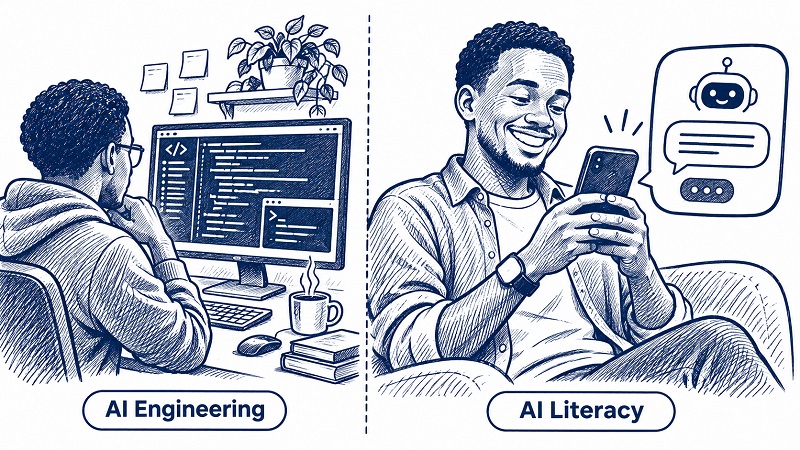
The confusion is understandable. “Learning AI” can point in two very different directions.
AI engineering is the technical track. Engineers write code in Python, build machine learning models, and design the systems behind tools like ChatGPT, Google Translate, and facial recognition software. This takes years of formal study in computer science and mathematics. Real career, but not what most people need.
AI literacy is the track for everyone else. It means understanding what AI tools can do, using them well, and knowing when their output is wrong. You don’t need to understand how a machine learning model was trained to get good results from it. Same way you don’t need to understand combustion engines to drive a car.
The World Economic Forum’s Future of Jobs Report 2025 ranks AI and big data among the fastest-growing skills globally. But it draws a clear line: engineering roles stay niche, while AI literacy is expected of workers across virtually every profession and industry.
That gap is enormous.
The Three Skills That Replace Coding
If coding isn’t part of this, what is? AI literacy breaks down into three practical abilities you can build through regular use.
Prompting matters most. When you use ChatGPT, Claude, or Google’s Gemini, you type in a question or instruction. How clearly you phrase that request directly determines the quality of what comes back. This is a communication skill, full stop. And you’ll notice real improvement within your first week of practice.
Evaluating the output is just as critical. AI tools can sound deeply confident while being flat wrong. They’ll state bad information with the same tone they use for accurate information. Catching those mistakes, verifying results, deciding when to trust a response: that takes critical thinking. Not code.
This is honestly the part most people underestimate. An AI tool can draft a business plan that reads beautifully but contains numbers that don’t hold up. Your job is spotting that.
Choosing the right tool is the third skill. Different AI tools serve different purposes. Some are strong at writing, others handle image creation, data analysis, or translation. Knowing which one fits your task saves time and gives you better results.
Research tracked by the Stanford HAI AI Index Report shows AI literacy skills spreading faster than AI engineering skills across most countries. Makes sense. Teachers, accountants, marketers, farmers, business owners all gain from AI literacy. Only a small fraction of them need to build models.
Your Smartphone Is Enough
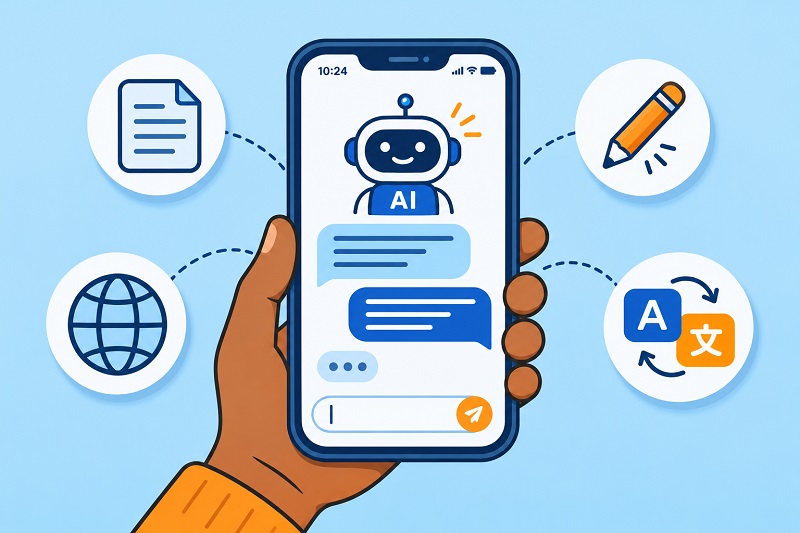
You don’t need a laptop. You don’t need expensive software or a fast internet connection. Most popular AI tools work on smartphones with modest data plans.
Open a free AI chatbot to start. ChatGPT, Claude, and Gemini are all available through mobile browsers and apps. Try something practical right away: draft a business proposal, summarize a long document, get a tricky concept explained clearly, or translate a message for a customer. Real tasks teach you faster than any tutorial.
Want a more structured path? A free AI course will walk you through the fundamentals step by step. These courses are designed for people with zero coding background and work entirely on a phone. They cover writing effective prompts, evaluating AI responses, and applying these tools to actual work and studies.
As your confidence grows, look at AI features already inside tools you use. Canva includes AI-powered design features. Google Sheets uses AI to help organize data. Translation apps handle cross-language communication with barely any effort. Most of these are free or very affordable.
People Without Code Already Use AI Every Day
Still think this is just for developers? Look at who’s actually doing it.
Teachers use chatbots to build lesson plans, create quiz questions, and write student feedback. A secondary school teacher types a topic into an AI tool and gets a structured lesson outline in minutes. That’s work that used to take an hour from scratch.
Small business owners use AI to write product descriptions for their online shops, handle customer messages, and plan social media posts. A trader selling on WhatsApp or Instagram can generate captions, suggest hashtags, and translate posts into multiple languages. Zero code.
Marketers brainstorm campaign ideas with it. HR professionals screen resumes. Journalists transcribe interviews. In agriculture, farmers across several countries rely on simple AI-powered apps to monitor crop health and predict harvests. Every one of these tasks runs on clear communication and willingness to practice. None of them require programming.
Why Ugandan Workers Should Start Now
Demand for AI-comfortable workers is climbing across every industry, and Uganda isn’t exempt from that shift. Employers will increasingly expect people to show they can work with these tools, regardless of whether the role is technical.
And there’s a protective side. When you understand how AI works at a basic level, you’re better positioned to spot AI-generated misinformation, recognize scams that use AI-created content, and make informed decisions about how your data is handled.
For students, entrepreneurs, and working professionals, building AI literacy now creates an advantage that compounds over time. The people who start today won’t just keep pace in a few years. They’ll be the ones others ask for help.
Curiosity Is the Only Prerequisite
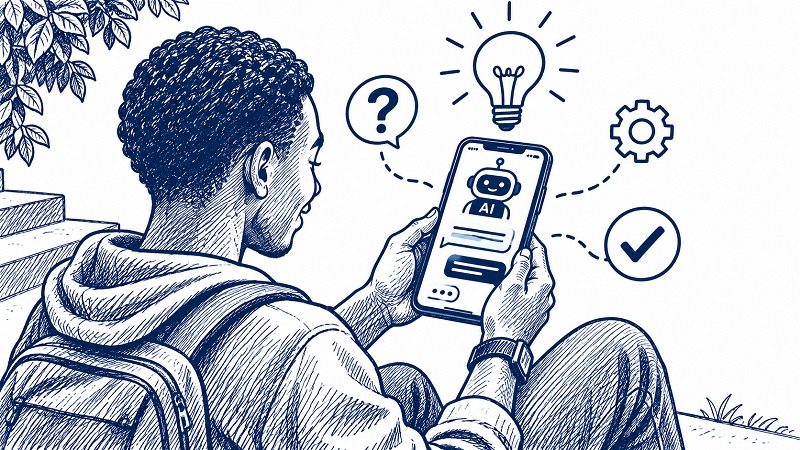
The biggest barrier to learning AI in Uganda isn’t a missing programming skill. It’s the mistaken belief that programming was ever required. AI literacy is about clear thinking, good communication with AI tools, and staying willing to experiment.
The tools are free. They run on your phone. They don’t care whether you have a degree in computer science or whether you finished school at all. What they respond to is how clearly you ask and how willing you are to try again when the first answer isn’t quite right.
Forget machine learning algorithms. Forget Python scripts. Open an AI tool, ask it something useful, and work on getting better results each time. That’s the whole starting point, and it’s genuinely available to anyone in Uganda with a phone and some curiosity. The only thing standing between you and AI literacy is the decision to try it.

 getdigitalug