getdigitalug
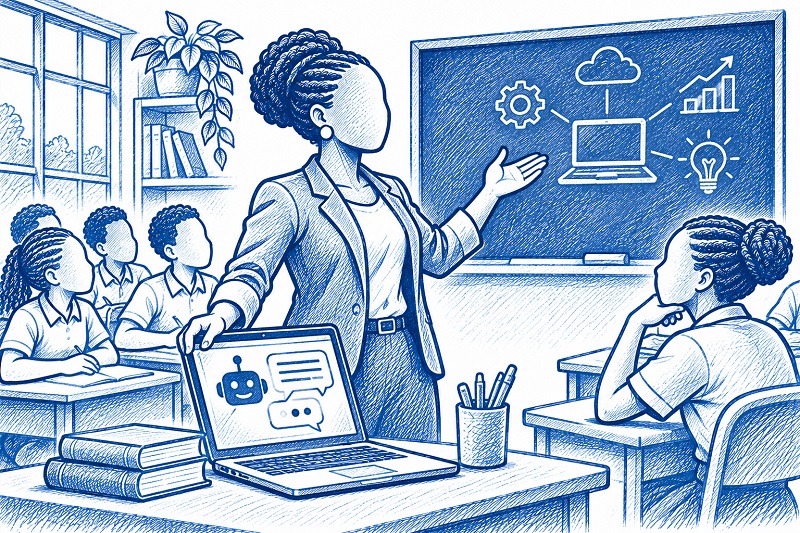
Two Senior Six candidates at Masaka Hall got caught using smartphones to pull AI-generated essays during their 2024 UACE history paper. According to The Independent Uganda, it was the first known case of students using AI apps to cheat on a national exam in the country. UNEB and the police investigated. Across the country, schools sat up and paid attention.
The problem, though, runs deeper than one exam scandal. The Ministry of Education has cautioned schools about unregulated AI use, but the vast majority of teachers still haven’t received any practical guidance on what these tools actually do or how to deal with them in a classroom.
The rest of this piece covers what AI tools can and can’t do, how to spot AI-generated student work, and how to rethink your assignments so AI becomes a learning tool instead of a shortcut.
What ChatGPT Actually Does (and Where It Falls Short)

ChatGPT and similar tools are large language models. They work by predicting the next word in a sentence, drawing on patterns learned from enormous amounts of text. A student types “Write a 500-word essay on the causes of World War I” and gets a polished response in seconds. These tools also summarize notes, translate between languages, answer factual questions, and explain concepts in multiple ways.
They don’t think, though. And they certainly don’t understand what they’re writing. The text they produce can sound confident while containing outright factual errors, a problem commonly called “hallucination.” They can’t draw on personal experience, classroom discussions, or local knowledge. Original analysis is another weak spot. And they’ve got no way to verify whether the information they produce is accurate or current.
For teachers, this distinction matters more than anything else about AI. These tools are strong at generating generic text on broad topics. They’re weak when a task demands genuine understanding, specific local context, or reasoning that connects to what a student has actually learned in class.
Spend a Few Hours with ChatGPT Before You Judge It

You can’t spot AI-generated work or design better assignments if you’ve never actually used these tools. A few hours with ChatGPT will change that.
Try feeding it an assignment you recently gave your students. Pay attention to how it structures the output, what vocabulary it favors, and whether it gets things wrong. You’ll get better at recognizing AI-written text in student submissions quickly. You’ll also notice that changing how you word a prompt changes the output entirely, and that’s useful knowledge when you sit down to write better assignment questions later.
For structured training, a free AI course in Uganda walks you through these skills step by step, from understanding how AI works to using it in your own teaching. UNESCO’s AI Competency Framework for Teachers, published in 2024, outlines 15 practical competencies covering AI ethics, AI-enhanced teaching, and professional development. It’s a solid reference for any teacher who wants to move past guesswork and build real confidence with these tools.
Spotting AI-Written Work Without Detection Software
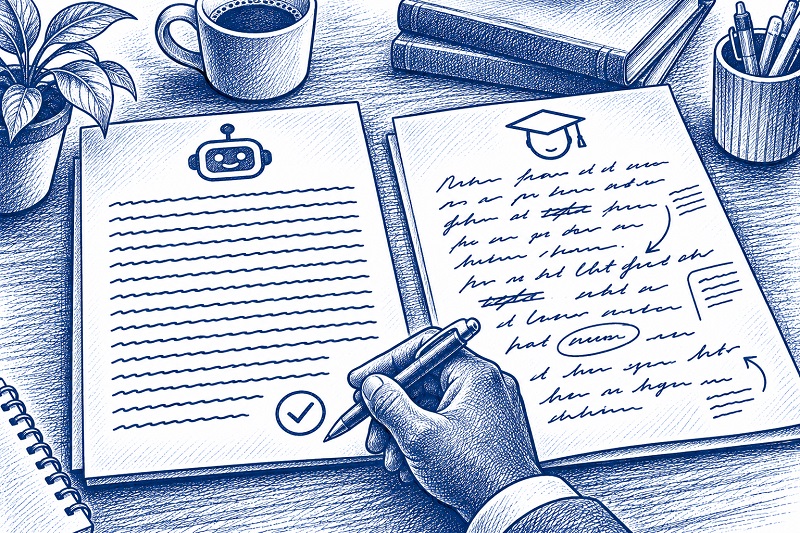
AI detection software exists, but the research is clear: these tools aren’t reliable enough for high-stakes decisions. They can flag genuine student writing as AI-generated, and they miss AI text that’s been lightly edited or blended with a student’s own words. Teachers who rely on detection tools alone risk punishing honest students while the clever ones walk right past.
Know your students’ writing instead. Keep samples of in-class work so you’ve got a baseline to compare against take-home assignments. If a student who usually writes short, direct sentences suddenly submits an essay full of advanced vocabulary and perfectly balanced paragraphs, that deserves a second look.
Some common signs that a piece of work may be AI-generated:
- The writing is fluent and well-structured but lacks personal voice or specific examples from class.
- Facts or statistics appear without sources, and some turn out to be wrong when checked.
- The essay reads like a textbook summary rather than the student’s own thinking.
- The tone stays oddly consistent throughout, with no shifts in confidence or style.
- The student can’t explain their key arguments when you ask them to.
A short follow-up conversation is more telling than any software out there. Ask the student to explain their reasoning or describe how they put the assignment together. If they wrote it themselves, they’ll walk you through their thinking without any trouble.
Set Assignments That Make AI Copying Pointless
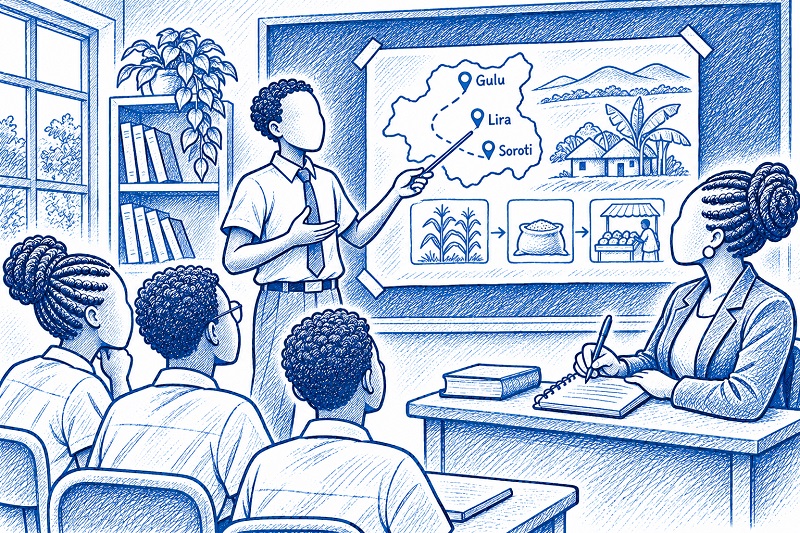
Banning AI outright isn’t the move. Focus on setting tasks that make copying from it either pointless or immediately obvious.
Ask questions rooted in local context. Instead of “Discuss the effects of colonialism in Africa,” try “How did the construction of the Uganda Railway change trade patterns in your district?” AI tools produce broad, generic answers. Questions tied to local history, community experiences, or specific classroom discussions force students to draw on knowledge that ChatGPT simply doesn’t have.
You can also build process into every assignment. When students submit an outline, a rough draft, and a reflection alongside their final piece, you can see how their thinking developed over time. Dropping in AI-generated text at the last stage becomes much harder to hide.
Including an oral component works just as well. Ask students to present their work briefly or answer two or three follow-up questions in class. This takes very little extra time and immediately reveals whether someone truly understands what they handed in.
Consider making AI part of the learning process itself. Assign tasks where students use ChatGPT to generate a first draft, then evaluate that draft for errors, bias, or missing local context. This builds critical thinking and teaches students to engage with AI tools thoughtfully instead of passively copying from them.
Uganda’s Ministry of Education and Sports is already moving in this direction. In April 2026, the Ministry partnered with UNESCO to validate a National Policy on ICT in Education, creating a framework for using digital tools in schools more deliberately. Policy takes time to reach individual classrooms, though, and teachers don’t need to wait for official guidelines before getting prepared.
You Don’t Need to Wait for Official Guidelines
AI tools aren’t going away. Students will keep finding new ways to use them, and that pace isn’t slowing down. But a teacher who understands what these tools can do, and more importantly what they can’t, is already ahead of most.
Get your hands on the tools yourself. Keep examples of your students’ writing on file. And rethink your assignments so they reward original thinking and specific local knowledge over polished repetition. When students see that their teacher gets how AI works and has designed coursework that values genuine effort, the motivation to cheat drops on its own. That’s a stronger safeguard than any detection tool will ever offer.

 getdigitalug