getdigitalug
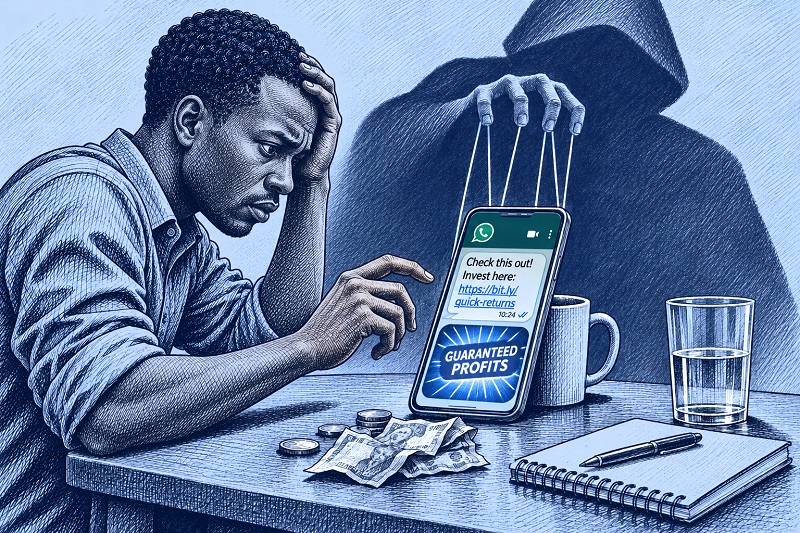
A WhatsApp message shows up from a friend. It links to a platform promising guaranteed daily profits through an “AI-powered trading bot.” Professional website, real-looking testimonials, polished language. All you need is UGX 100,000 through Mobile Money to get started.
That’s a scam. And it was built for people who don’t know enough about AI to question the pitch.
AI fraud is growing fast across Africa, and Uganda ranks among the most exposed countries on the continent. Scammers are betting on one thing: the gap between what people have heard about AI and what they actually understand about how it works. That gap is where your money vanishes. The rest of this piece covers the three main types of AI scams hitting Uganda right now, what makes them so effective, and what you can do to protect yourself.
What These AI Scams Actually Look Like in Uganda
AI scams targeting Ugandans typically land in three categories. Each one rides the buzz around artificial intelligence while counting on the victim’s limited knowledge of the technology.
Fake AI Investment Platforms
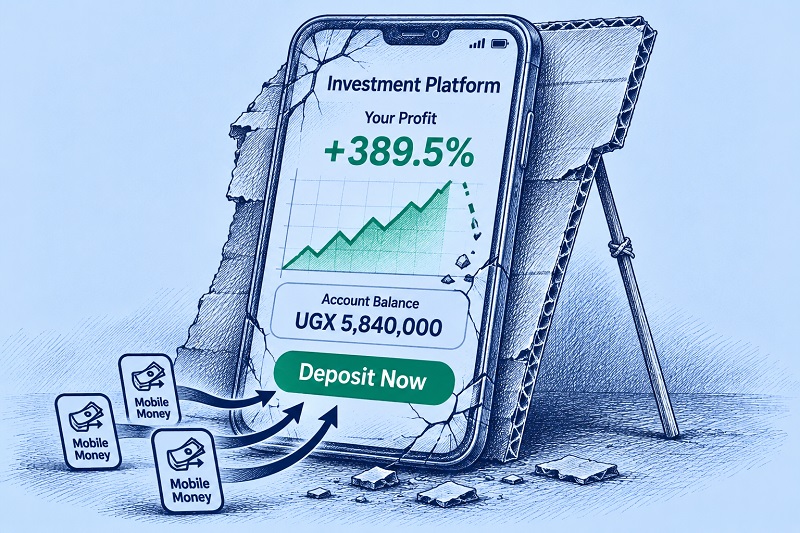
These are the most common by far. A platform claims to use AI algorithms to trade cryptocurrency, forex, or stocks on your behalf. The promise is “guaranteed returns” of 10%, 20%, sometimes 50% per day. You deposit money through Mobile Money, and you might even see fake profits appear in your dashboard for the first few days. That’s by design. It keeps you hooked long enough to pull your friends in.
No AI trading system on earth can guarantee profits. Legitimate investment platforms are regulated, they’re transparent about risks, and they don’t recruit customers through WhatsApp chains or Telegram groups. What you’re looking at is a Ponzi scheme dressed up in AI terminology.
This pattern is accelerating across the region. According to INTERPOL’s African Cyberthreat Assessment Report 2026, online scams are now the most frequently reported type of cybercrime on the continent. Cybercrime losses across Africa more than doubled from $192 million to $484 million in 2025, driven largely by AI-enabled scams, mobile money fraud, and automated social engineering.
AI-Written Phishing Messages That Actually Fool You
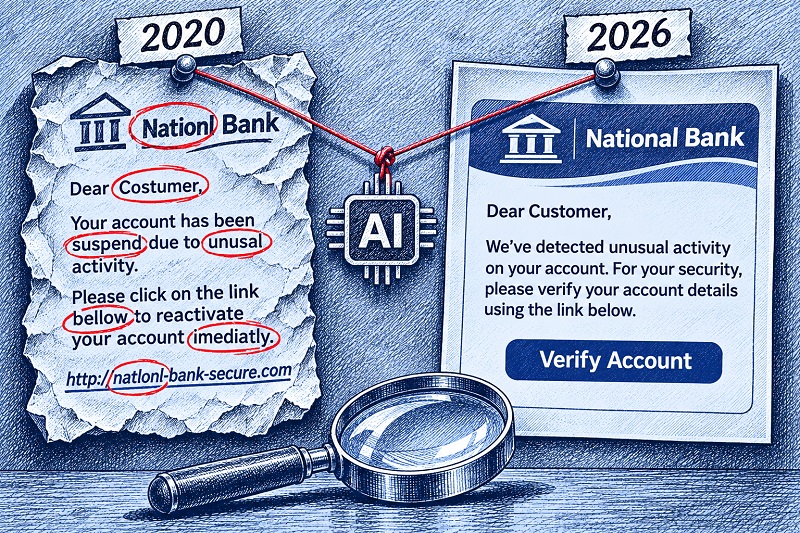
Not long ago, phishing messages were easy to catch. Bad spelling, awkward grammar, logos that looked off.
That era is over.
Scammers now use AI tools to write messages that read naturally and look professional. You might get an SMS or email that seems to come from your bank, a government agency, or your mobile money provider. It’ll ask you to click a link, verify your account, or confirm a transaction. The link leads to a fake site built to capture your PIN, password, or personal details.
AI has stripped away most of the old red flags. Grammar is clean, the tone matches what you’d expect from a real organization, and the requests sound reasonable. Industry reports suggest a large majority of phishing messages now contain AI-generated content, making them far harder to catch. Looking for bad English won’t save you anymore.
Bogus “AI Training” Programs
Some scams go after people who genuinely want to learn about AI. You’ll find ads on social media or WhatsApp promoting “AI certification courses” or “AI job training programs” that promise high-paying remote careers after a short program. But first you need to pay registration fees, “exam fees,” or “certificate processing fees” before you can access anything.
These platforms rarely deliver meaningful training. The certificates carry no recognized value. And the promised jobs? They don’t exist. Scammers collect your fees and either disappear or keep requesting more payments at every stage.
Why Uganda Is So Vulnerable to These Scams

The main reason these scams work isn’t complicated: most people have heard of AI but don’t understand its limits. Scammers exploit that knowledge gap on purpose.
When someone hears “AI-powered,” they tend to assume the technology is advanced, reliable, and capable of generating easy money. They don’t know that AI can’t guarantee investment returns, that it doesn’t create wealth from nothing, and that most real AI applications are tools designed for specific, narrow tasks. Understanding those limits is your strongest defense.
This is exactly why basic AI literacy matters. Once you know what AI actually does, you start recognizing when someone is misusing the term to fool you. Getting free AI skills training is one practical step that helps you tell the difference between real AI applications and the fakes scammers use as bait.
Uganda’s mobile money environment compounds the problem. Mobile Money is how most Ugandans send and receive money, and scammers know it inside out. Deposits are instant, reversals are difficult, and these schemes often spread through tight personal circles (friends, family, church groups), which makes them feel trustworthy rather than suspicious. According to Sumsub’s Identity Fraud Report 2025–2026, Uganda recorded a fraud rate of 4.7% in 2025, placing it among Africa’s most exposed markets to digital fraud.
How to Spot an AI Scam Without Being a Tech Expert

You don’t need technical knowledge to protect yourself. A few direct questions and awareness of common warning signs will save you real money.
- Guaranteed returns are always a red flag. No legitimate investment, AI-driven or otherwise, can promise guaranteed profits. If someone says their AI bot will double your money, walk away.
- There’s pressure to act right now. Scammers create urgency. They’ll tell you the “opportunity” closes soon or that early investors get better rates. Real businesses don’t pressure you into sending money within hours.
- The AI explanation stays vague. Ask how the system actually generates profits. If the answer avoids specifics, it’s almost certainly a scam. Real companies can explain their technology.
- You pay before you learn anything. Be cautious of any training platform that demands upfront payment, especially if you found it through a social media ad or a forwarded WhatsApp message.
- You earn by recruiting others. If the platform pays you for bringing in new members, you’re looking at a pyramid scheme, regardless of how many times it mentions “AI.”
What to Do If You’ve Already Sent Money
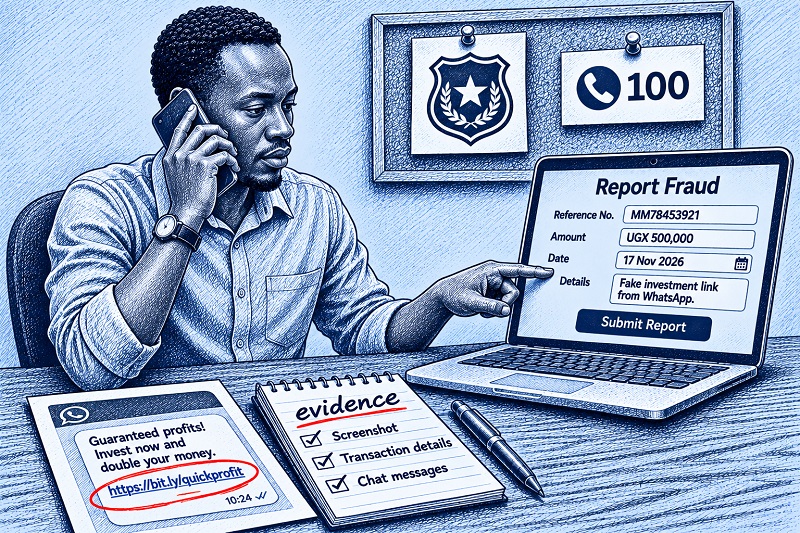
If you’ve already paid into a suspected AI scam, move fast. Contact your mobile money provider and explain what happened. Reversals aren’t always possible, but reporting the transaction can help flag the scammer’s account and protect others.
Report the fraud to the Uganda Police Force’s Cyber Crime Unit too. If you received a suspicious message or found a fake platform, take screenshots before the scammers pull the content down. That evidence helps investigators track the scheme.
The U.S. Federal Trade Commission has taken action against several AI-related fraud operations and provides practical consumer advice that applies globally. Their core message is blunt: if a business promises big earnings driven by AI tools, treat the claim with serious skepticism.
And warn the people around you. If the scam reached you through a group chat or social circle, tell others right away. Many of these schemes spread because victims unknowingly promote them to friends and family before they realize what happened.
Your Best Defense Is Knowing What AI Can’t Do
AI is a powerful technology, and it’ll keep shaping how people in Uganda work, learn, and do business for years to come. But that same power makes it effective cover for fraud when people don’t understand it.
If an AI opportunity sounds too good to be true, it is. Take time to learn the basics of how AI works, ask hard questions when something doesn’t add up, and never send money based on a promise you can’t verify. Every person in Uganda who learns what AI can and can’t do is one more person the scammers can’t touch. That’s not a small thing. It’s how you make this kind of fraud less profitable, one informed decision at a time.

 getdigitalug